Can Security Guards Carry Handcuffs in the UK?
Can security guards carry handcuffs in the UK? It is a question that regularly causes debate within the private security industry.
You will hear a variety of answers from security officers, door supervisors, security companies and even police officers. Some people believe that handcuffs are exclusively for police and other law-enforcement personnel, while others argue that anyone can legally carry them.
The reality is more nuanced.
There is no general UK law that makes it illegal for a civilian or SIA-licensed security operative to possess or carry handcuffs. However, carrying handcuffs and using handcuffs are two very different issues.
The Security Industry Authority (SIA) has made its position clear: it neither endorses nor declines to endorse the use of handcuffs. The SIA also states that security operatives have no legal powers over and above those available to other members of the public.
That distinction is extremely important.
Are handcuffs legal for security guards in the UK?
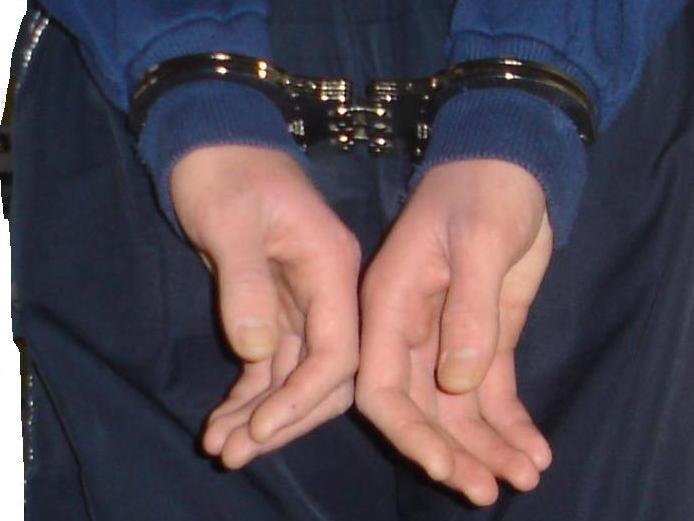
Yes, simply carrying handcuffs is not, in itself, illegal in the UK.
This applies to members of the public as well as SIA-licensed security operatives.
However, an SIA licence does not give a security guard or door supervisor police powers.
Security professionals generally have the same legal powers as any other member of the public when it comes to detaining someone and using force.
The SIA has specifically stated that licence holders do not have additional powers to detain or arrest people simply because they hold an SIA licence. The regulator has also warned licence holders against taking the law into their own hands or acting as vigilantes.
Therefore, the question should not simply be:
“Can I carry handcuffs?”
A much more important question is:
“Under what circumstances could I lawfully use them?”
That is where the situation becomes considerably more complicated.
Can door supervisors carry handcuffs?
A door supervisor can legally carry handcuffs, provided there is no other legal reason why they cannot possess them.
However, this does not mean that every door supervisor should automatically be issued with a pair.
The SIA does not endorse or encourage handcuff use. Its published position is that anyone carrying handcuffs needs to understand that their use could constitute a criminal offence unless it can be justified as reasonable and proportionate in the circumstances.
For a professional security company, that means handcuffs should never simply be treated as another piece of equipment on a security belt.
There should be a clear operational reason for carrying them, appropriate training, suitable equipment, management controls and a robust policy covering their use.
Carrying handcuffs is not the same as having the authority to use them
This is probably the most important point for anyone working in private security.
A pair of handcuffs does not give you additional legal powers.
Putting handcuffs on somebody against their will amounts to a use of force and potentially an assault. That use of force must therefore be capable of legal justification.
The SIA states that improper use of handcuffs can result in civil and criminal liability, including allegations of assault.
The fact that somebody is:
- aggressive,
- intoxicated,
- refusing to leave a premises,
- verbally abusive,
- suspected of stealing,
- or causing a disturbance
does not automatically mean that handcuffing them is lawful.
The circumstances of the incident matter.
What about reasonable force?
When security personnel physically restrain someone, the use of force must be considered carefully.
The key principles are generally necessity, reasonableness and proportionality.
In practical terms, a security operative should be able to explain:
Why was force necessary?
Why were handcuffs necessary?
Why was that level of force reasonable?
Was the force proportionate to the circumstances?
These are the sorts of questions that could ultimately be asked by an employer, police officer, solicitor, regulator or court.
Simply saying “I was trained to use handcuffs” is not, by itself, a legal justification for using them.
Training gives you knowledge and competence. It does not create additional legal powers.
Why training matters
At Stance Security, we believe that handcuffs should never be treated as a status symbol or something to carry simply because they look professional.
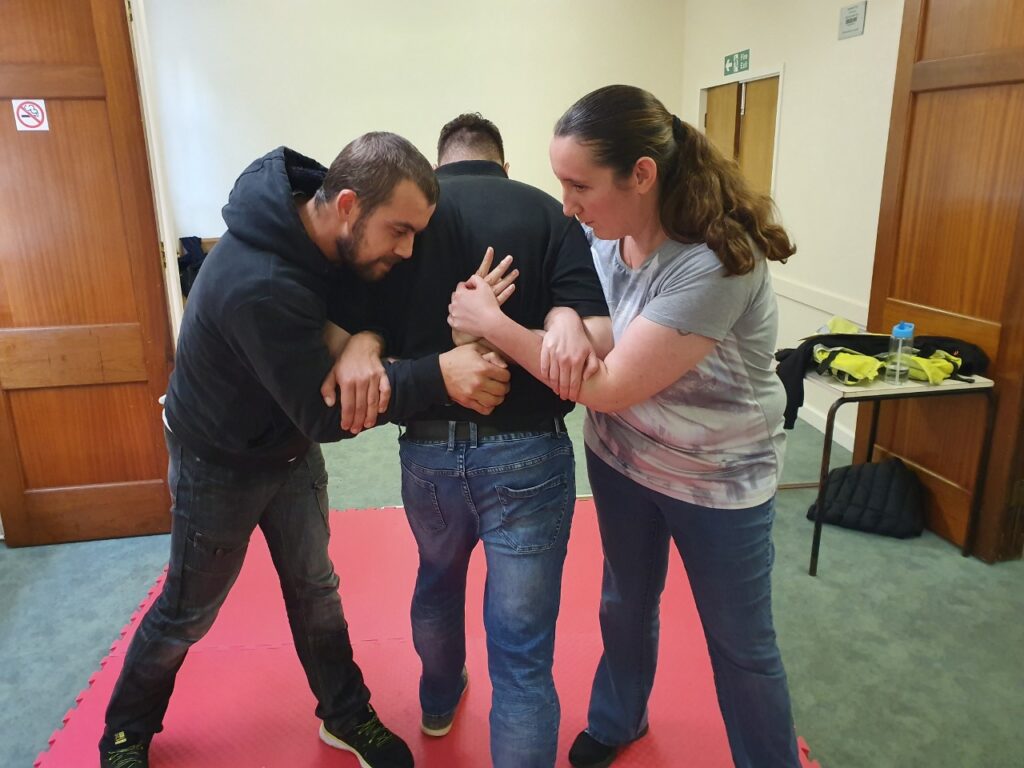
If a company authorises personnel to carry handcuffs, those personnel should receive appropriate training covering areas such as:
- The legal framework surrounding the use of force
- Reasonable and proportionate force
- Arrest and detention principles
- Handcuff application
- Handcuff removal
- Positioning and monitoring
- Risks associated with restraint
- Communication and de-escalation
- Medical considerations
- Incident reporting
- Post-incident procedures
- When not to use handcuffs
Training should also be maintained and refreshed where appropriate.
This is particularly important because restraint can introduce significant risks to the person being restrained as well as the security operative.
Handcuffs are not a substitute for good security practice
There is sometimes a misconception that carrying handcuffs makes a security officer more capable of dealing with difficult incidents.
In reality, professional security is about preventing incidents from escalating wherever possible.
Good communication, observation, positioning, teamwork, conflict management and de-escalation should all form part of an effective security operation.
Handcuffs should not become the first option simply because they are available.
They are a restraint tool, not a replacement for professional judgement.
What does the SIA say about handcuffs?
The SIA’s published position is particularly important because there are many conflicting opinions within the industry.
The SIA states:
“The SIA neither endorses nor declines to endorse handcuff use.”
It also confirms:
“There is no law in the UK that prevents civilians carrying handcuffs.”
However, the SIA makes an equally important point: an SIA-licensed security operative has no legal powers over and above those of another civilian.
The SIA’s more recent guidance reinforces that position. It does not encourage licence holders to use handcuffs and warns that improper use can result in civil and criminal liability.
This is why security companies should have their own clear policies and procedures if handcuffs are authorised for operational use.
What if the police tell a security guard that handcuffs are illegal?

This is another area that causes confusion.
There is no general prohibition on civilians possessing handcuffs. The SIA has confirmed this in its published response.
However, the circumstances surrounding possession can obviously matter.
For example, possession of an item does not necessarily mean that its use is lawful.
A police officer may also investigate an incident where handcuffs have been used and determine whether an offence may have occurred.
Security personnel should therefore avoid assuming that:
“Handcuffs are legal to carry, therefore anything I do with them is legal.”
That is simply not the case.
What should a security company consider before issuing handcuffs?
For a professional security company, the decision should go considerably further than simply buying equipment and putting it on an employee’s belt.
A responsible employer should consider:
1. Operational necessity
Is there a genuine operational requirement for handcuffs?
Not every security contract requires them.
2. Training and competence
Has the operative received suitable training?
Can they demonstrate competence rather than simply having attended a course?
3. Company policy
Does the company have a written handcuff and use-of-force policy?
4. Risk assessment
Has the company assessed the risks associated with carrying and using handcuffs within the particular environment?
5. Equipment
Are the handcuffs suitable, serviceable and properly maintained?
6. Insurance
Does the company’s insurance cover the authorised carrying and use of restraints?
This should never be assumed.
7. Reporting and investigation
Is there a clear procedure for recording and reviewing every use of handcuffs?
8. Management oversight
Who authorises employees to carry them and who reviews their use?
These controls help protect the public, the employee and the security company.
The risks of getting it wrong
Handcuffing somebody is not risk-free.
Poorly applied or unnecessarily maintained restraints can cause injury, and restraint itself can introduce additional risks.
Government guidance on the use of force in other regulated environments repeatedly emphasises the importance of trained and competent personnel and the principles of necessity, reasonableness and proportionality.
For private security companies, this reinforces an important principle:
If you are going to authorise your employees to carry and potentially use handcuffs, you need to take the responsibility seriously.
That means competent people, suitable equipment, clear procedures and effective management.
So, can security staff carry handcuffs?
Yes. There is no general UK law prohibiting a civilian or SIA-licensed security operative from carrying handcuffs.
But that does not mean that a security operative has the same powers as a police officer.
It does not mean that a security guard can handcuff somebody simply because they are causing trouble.
And it certainly does not mean that carrying handcuffs makes the use of them automatically lawful.
The SIA’s position is clear: it does not endorse or encourage handcuff use, and SIA licence holders have no additional powers simply because they hold a licence.
For responsible security companies, the focus should therefore be on training, competence, risk assessment, company policy and professional judgement.
Our view at Stance Security
At Stance Security, we believe that handcuffs should be treated as a serious piece of specialist security equipment, not as standard kit that every security operative should automatically carry.
Not every member of security staff needs handcuffs.
Not every site needs them.
And not every situation justifies their use.
Where handcuffs are authorised, the operative carrying them should understand their responsibilities, receive appropriate training and work within a clear company policy.
Ultimately, professional security is not about having the most equipment on your belt.
It is about having the right people, the right training, the right procedures and the right judgement to deal with an incident safely and lawfully.
Handcuffs may be legal to carry. Using them is a completely different question.
If your organisation is considering introducing handcuffs or other specialist equipment into its security operation, Stance Security can help you assess the operational requirements and ensure that your security provision is built around professional standards, competent personnel and effective risk management.
Currently
there seems to be some controversy in the UK whether security staff including
door supervisors can carry handcuffs whilst on duty.
This
raises some rather lengthy discussions points and personal opinions.
Wrongly
some companies, security staff and even police officers say that you cannot, as
a member of the public carry handcuffs!
There
have been some cases where police officers have confiscated handcuffs or even
threatened to arrest security staff for carrying handcuffs.
So, are only Police Officers and those involved
in law enforcement allowed to carry and use cuffs? In short, no. Technically
you and I as civilians are, by law, allowed to carry and use handcuffs.
However
before you run out and buy yourself a pair (Not from Ann Summers) just because
Ant from Stance Security said you can there is a lot more you should know….
As
part of carrying a set of handcuffs you will need to be trained in the reasonable
use of handcuffs, your pair of handcuffs need to be fit for purpose and of good
service (so no cheap cuffs off a dodgy website). Ideally you would also need to
be trained in restraint and receive regular refresher training and have a good
understanding of reasonable force. This would be considered as part of
professional and good practice.
Interestingly
the Security Industry Authority do not have much to say about this and are not
realising much information and leaving it to the companies to regulate.
So
what does the SIA say about this:
“I
can confirm that we do hold the information you requested.
The
SIA neither endorses nor declines to endorse handcuff use.
There
are many laws which govern such use for example but not limiting to:
The
Human Rights Act 1998:
Articles
2,3 and 5.
Health
and Safety at work at 1974 – Sec 2 (2a)
Manual
Handling Regulations 1992
My
personal opinion is that not all persons should be allowed to carry and use
handcuffs within a company as they may not have received the training or
understand the training correctly or worse, received substandard training! I
believe it should be heavily regulated by an employer.
Ultimately
any force used on another person against their will amounts to assault and will
need to be justified, but there is no legal reasons why a correctly trained and
insured security operative cannot carry handcuffs.