
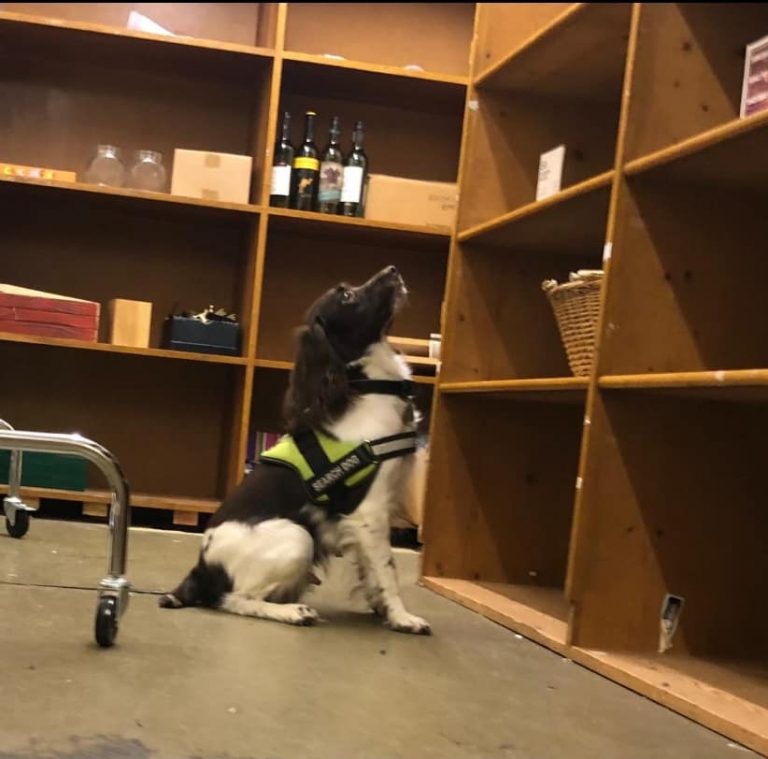
A Detection Dog is one of the most powerful assets in modern security, trusted across the UK to locate illegal drugs, explosives, cash, and other contraband with remarkable precision.
These highly trained dogs use their extraordinary sense of smell to safeguard communities, support law enforcement, and protect businesses and events.
At Stance Security, we highlight the breeds most commonly used in the UK — English Springer Spaniels, Cocker Spaniels, Labradors, and Pointers — and explain why their unique abilities make them the backbone of professional detection teams.
When people think of detection dogs, they often imagine large breeds like German Shepherds patrolling airports or train stations. In reality, the UK relies on a very different set of dogs for drug detection and scent work. At Stance Security, we believe in educating our clients and the public about the facts — because understanding how detection dogs operate helps build trust in the security measures that protect us all.
🚔What Do Detection Dogs Search For?
Detection dogs in the UK are trained to identify a wide range of substances and contraband, including:
• Illegal drugs such as cocaine, heroin, cannabis, and MDMA.
• Other contraband including tobacco, cash, firearms, explosives, and even smuggled people.
• Specialist deployments at airports, seaports, postal depots, schools, workplaces, festivals, and sporting events.
Their work is vital in keeping communities safe, preventing crime, and supporting law enforcement and private security operations.
Which Detection Dog Breeds Are Used in the UK?
Unlike popular belief, the UK does not use German Shepherds or Belgian Malinois for drug detection. These larger breeds are reserved for patrol and apprehension roles within policing, where strength, presence, and control are paramount. When it comes to narcotics detection, however, the backbone of UK teams is made up of gundog breeds — specifically English Springer Spaniels, Cocker Spaniels, Labradors, and Pointers. These dogs are selected not for size or intimidation, but for their extraordinary scenting ability, boundless stamina, and adaptable nature. Their hunting heritage makes them naturally inclined to search tirelessly, cover ground quickly, and remain focused on locating hidden scents. Combined with their friendly temperaments and agility, these breeds are ideally suited to working in busy environments such as airports, schools, workplaces, and large public events, where discretion and efficiency are just as important as accuracy
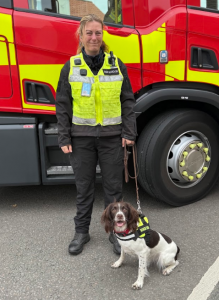
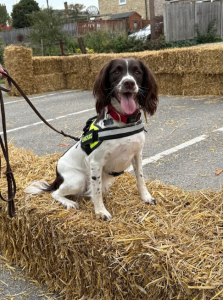
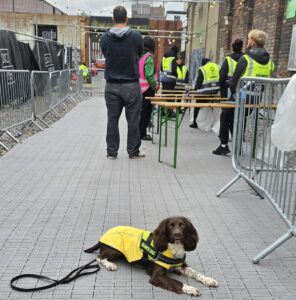
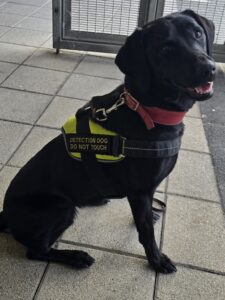
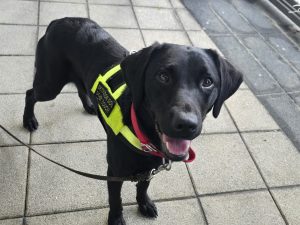
• English Springer Spaniels
English Springer Spaniels are the most common detection dogs in the UK, and for good reason. Their natural agility and boundless energy make them ideally suited to the demands of drug detection and search work, where covering large areas quickly and thoroughly is essential. Highly trainable and eager to please, Springers thrive in structured working environments and can maintain focus for long periods without losing enthusiasm. Their hunting heritage gives them an instinctive drive to locate and retrieve, which translates perfectly into scent detection tasks. Combined with their manageable size and friendly temperament, English Springer Spaniels are able to work effectively in busy public spaces such as airports, schools, and festivals, making them the backbone of professional detection teams across the country.
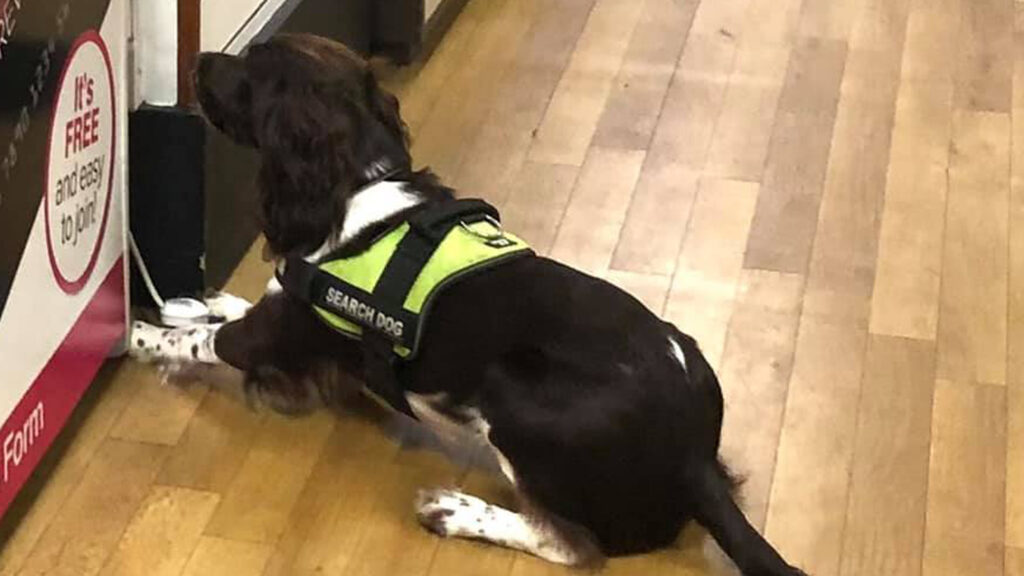
• Cocker Spaniels
Cocker Spaniels are another highly valued breed in UK detection work, particularly for environments where agility and adaptability are key. Their smaller size allows them to search in confined spaces such as vehicles, apartments, or crowded venues, making them ideal for close-quarter detection tasks. Despite their compact build, Cockers are energetic and determined, with a strong hunting drive that keeps them focused on scent work for long periods. They are also known for their friendly and approachable nature, which makes them well-suited to working in public-facing roles where reassurance and discretion are important. With their combination of stamina, intelligence, and versatility, Cocker Spaniels complement the larger Springer Spaniels and Labradors, ensuring detection teams can operate effectively across a wide range of settings
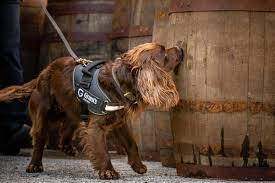
• Labrador Retrievers
Labrador Retrievers are a cornerstone of UK detection dog teams thanks to their reliability, versatility, and calm temperament. Known for their exceptional scenting ability, Labradors are highly effective at identifying narcotics and explosives, making them indispensable in both law enforcement and private security operations. Their steady nature allows them to work confidently in busy, public-facing environments such as airports, schools, and large events, where discretion and reassurance are just as important as accuracy. Labradors are also renowned for their trainability and eagerness to work, which means they can adapt to a wide range of detection tasks while maintaining consistency and focus. With their combination of intelligence, stamina, and approachable personality, Labradors remain one of the most trusted breeds for professional detection work across the UK.
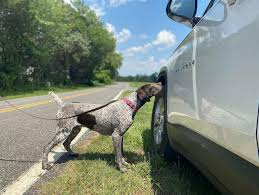
• Pointers (e.g., German Shorthaired Pointer)
Pointers, such as the German Shorthaired Pointer, are increasingly recognised in UK detection work for their intelligence, stamina, and strong scenting ability. Originally bred as hunting dogs, Pointers have a natural instinct to locate and indicate the presence of game — a behaviour that translates seamlessly into detection tasks. Their drive and focus make them highly effective at identifying narcotics and other contraband, while their athletic build allows them to cover large areas quickly and efficiently. Pointers are also adaptable, capable of working in both outdoor environments and busy public spaces, which makes them valuable additions to detection teams. With their combination of determination, trainability, and keen noses, Pointers complement Spaniels and Labradors, ensuring UK detection dog units have a diverse and reliable set of breeds to call upon.
Why Not Other Breeds As A Detection Dog?
Large breeds like Shepherds and Malinois are indeed used in UK policing — but for patrol, crowd control, and apprehension, not for drug detection. Detection work requires dogs that can work tirelessly, cover ground quickly, and remain focused on scenting tasks. Spaniels, Labradors, and Pointers fit this profile perfectly
Who Carries Out Accreditation For Detection Dogs
In the UK, detection dogs are licensed and accredited under the National Canine Training and Accreditation Scheme (NCTAS), which sets the official standards for police, military, and government dog teams. For the private security sector, the Home Office introduced the National Canine Training and Accreditation Scheme – Private Security Industry (NCTAS‑P), developed in partnership with Counter Terrorism Policing and the National Protective Security Authority (NPSA). These schemes ensure that every detection dog and handler team is assessed against rigorous criteria, covering odour identification and structured search exercises across vehicles, buildings, and public spaces. Accreditation provides assurance that detection dog services meet nationally recognised standards, giving venues, businesses, and local authorities confidence in the quality and consistency of the teams they deploy.



Stance Security’s Commitment
At Stance Security, we stay aligned with UK operational standards and accreditation frameworks.
By understanding the correct breeds and their roles, we ensure our training, consultancy, and communications are accurate, professional, and compliant.
We also believe in myth-busting — because misinformation about detection dogs can lead to unrealistic expectations or poor practice.
By educating our clients and communities, we help raise standards across the security industry.
✅ Key Takeaway
In the UK, detection dogs for drugs are almost exclusively Spaniels, Labradors, and Pointers. Their work is critical to safeguarding communities, and their selection reflects decades of proven effectiveness in scent detection
